Reefer Rates Are Up, but Carrier Profits Aren't Following
Summary: Reefer rates have climbed this past year, but costs have climbed almost as fast, and most carriers are still not profitable. This article walks through what the FreightMath reefer benchmark shows and how carriers can use it to validate the case for further increases with their shippers this bid season.
For reefer carriers, the last year has brought real rate relief. It has also brought higher costs on nearly every line of the ledger, and for many fleets those costs have absorbed the gains almost as fast as they arrived. Profitability has improved, but it has not been restored.
Our latest benchmark puts numbers to what many carriers already feel. We looked at the financials of all reefer carriers on the FreightMath™ platform from Jan. 2025 through Sept. 2026. Rates per mile rose about a third. Costs rose almost as fast. In the latest quarter, FreightMath reefer carriers spent $1.04 for every $1.00 they billed. More than half were still above a break-even operating ratio.
The full report, available on the FreightMath Research page, has every chart and figure. Use it to your advantage. The benchmark is independent evidence, drawn from real carrier financials, of why rates need to keep moving. This article walks through what those numbers mean and how to put them in front of your shippers.
Still Digging Out of the Freight Recession
The rate increases of the past two years did not create profit. They repaired damage.
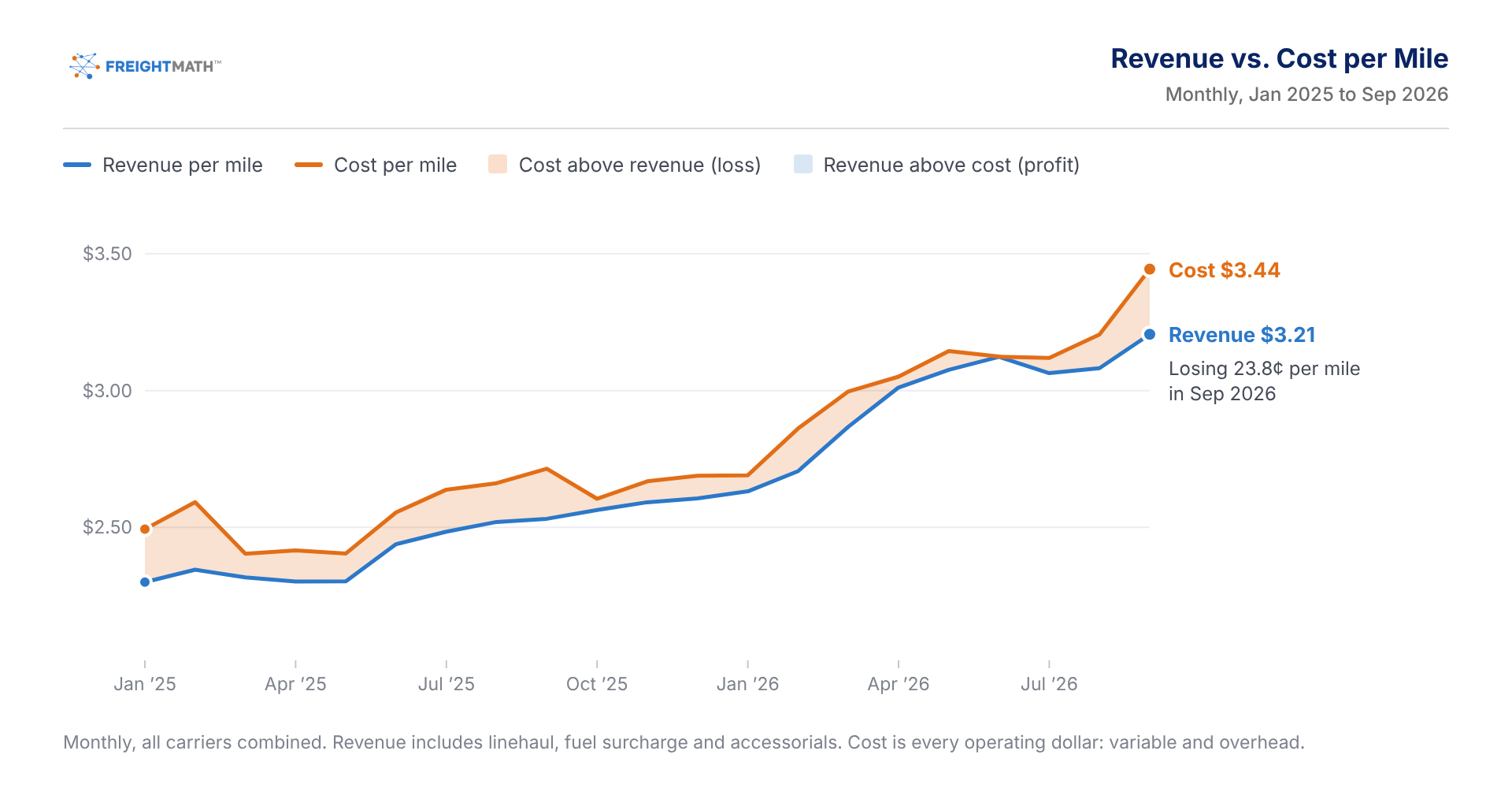
Through the long freight recession, carriers absorbed significant cost increases while rates stayed suppressed. Most spent those years in survival mode, and the data says they are not out of it yet. As a group, these carriers lost money in every quarter we studied, including the latest one, which is still preliminary.
This is not a few weak operators dragging down the average. The median carrier is still above a break-even operating ratio too.
Costs Did Not Wait
Rates went up because costs went up, and those costs were not one-time hits. Every major category rose: fuel, driver pay, maintenance, equipment, insurance and overhead. Driver pay, the biggest line on the ledger, is not coming down if you want seats filled.
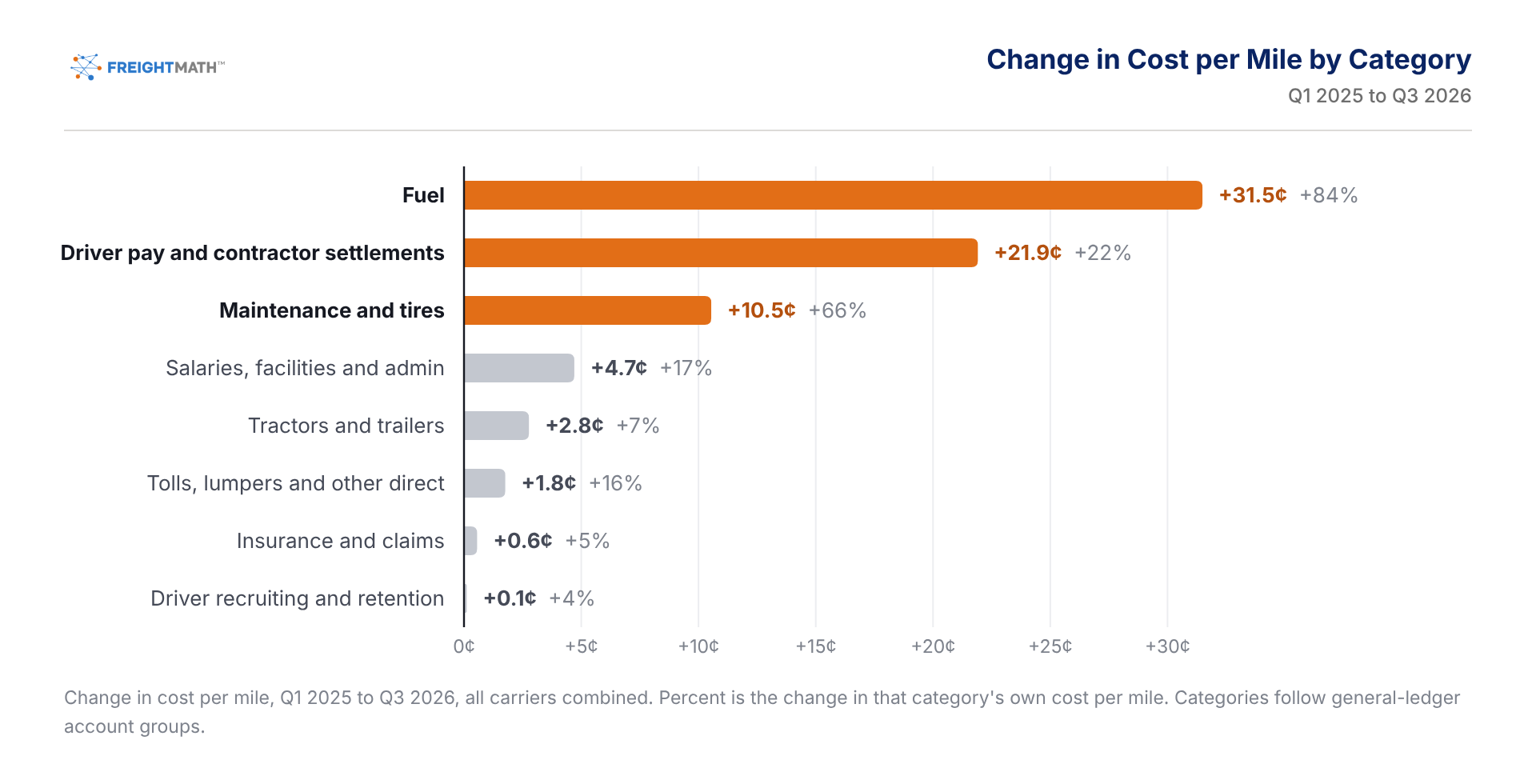
Fuel deserves a straight answer, because shippers will raise it. Yes, part of the rate increase was fuel surcharge, and diesel prices climbed sharply. But surcharge never covered the full fuel bill in this data, and in the latest quarter it covered just 84%. For a carrier whose surcharge does not account for reefer fuel, the gap is even wider. The shortfall lands on linehaul. Take fuel out of both revenue and cost, and carriers are only at break-even. Put it back and they are losing money.

Capacity Follows Profit
Here is what shippers should watch most closely. Carriers that were losing money a year ago are running noticeably fewer miles today. A carrier running fewer miles is offering less capacity, whether that means fewer drivers, idle tractors, or walking away from freight that does not pay.
This also confirms something carriers have proven again and again: they will shift capacity to where the rates work. Chasing volume does not fix a losing operation. It just loses money on more miles. As our Truckload Network Playbook series puts it, a load can carry a solid rate per mile and still hurt the network. A carrier that cannot name the freight it is willing to lose will end up acting as if every load must be won.
As carriers that cannot earn a return pull back or leave the industry, capacity tightens. That tightening is a main driver of where rates go next.
Why Shippers Should Want You Profitable
A shipper’s best carriers are the ones that show up, protect the load, and pick up the phone. Those carriers have to stay in business to keep doing it. Shippers have a vested interest in their trusted carriers becoming profitable, because a carrier that cannot stay in business cannot keep hauling their freight.
That is the conversation to have this bid season. Not “we want more,” but “here is what it takes to keep serving you.”
What To Bring to the Table
Break-even is not the goal. A carrier needs a real margin to hire and keep drivers, replace equipment, and absorb a bad quarter. At today’s costs, getting to a sustainable 95 operating ratio takes about 9.5% more on rates. And costs will not hold still. If they keep rising at last year’s pace, that number grows.
Going into negotiations:
- Bring the benchmark. Share the report with your shippers. It shows that the cost pressure is industry-wide, and that the increases so far have not restored profitability. It moves the conversation from your word to the data.
- Start with your cost floor. Your own cost to serve speaks first, network fit second, and the market third.
- Do not negotiate against yourself. Too many carriers trim their own ask before the shipper has even responded. Make the full case first, then decide what concession is acceptable.
- Make it specific. The benchmark validates why rates need to move. Your lane-level numbers, in dollars, show where.
- Show the fuel gap. Know your fuel recovery rate and show where surcharge falls short, especially on reefer fuel.
- Frame the increase as protecting service. You are keeping capacity on their freight, not padding margin.
- Expect “rates already went up.” They did. Costs went up almost as much.
For a step-by-step look at building that case lane by lane, read Price the Network, Not the Lane.
A Repair Job, Not a Windfall
Reefer rates are up, and shippers have felt it. But costs rose nearly as fast, and most carriers are still underwater. Further increases are not opportunism. They are what it takes to keep refrigerated capacity on the road, and now you have the data to prove it.
To discuss how data-driven analysis can support your rate conversations this bid season, contact a KSMTA advisor via the form below.
About the data: General-ledger actuals from reefer carriers on KSM Transport Advisors’ FreightMath platform, Jan. 2025 through Sept. 2026. All figures combine every carrier’s totals, and no individual carrier is identified. The full benchmark report, available on FreightMath Research, has the detail behind every point here.
Related Content
Where Ownership
Meets Opportunity
At KSM, you’re more than an employee, you’re a firm owner.